Overlooked
INSTITUTION: University of New South Wales
YEAR: 2023
DISCIPLINE: Exhibition Design, Curatorial, Spatial Design, Branding
CURATOR: Abeerah Saad
OBJECTS: Kaleigh Kenney
GRAPHIC DESIGN: Bettina Tan
SPATIAL DESIGN: Oliver Salter
PROJECT COORDINATOR: Phillip Muzzall
A proposed exhibition that brings together fifteen works from a range of periods and disciplines, connected by a multitude of perspectives through which each object can be seen and interpreted.
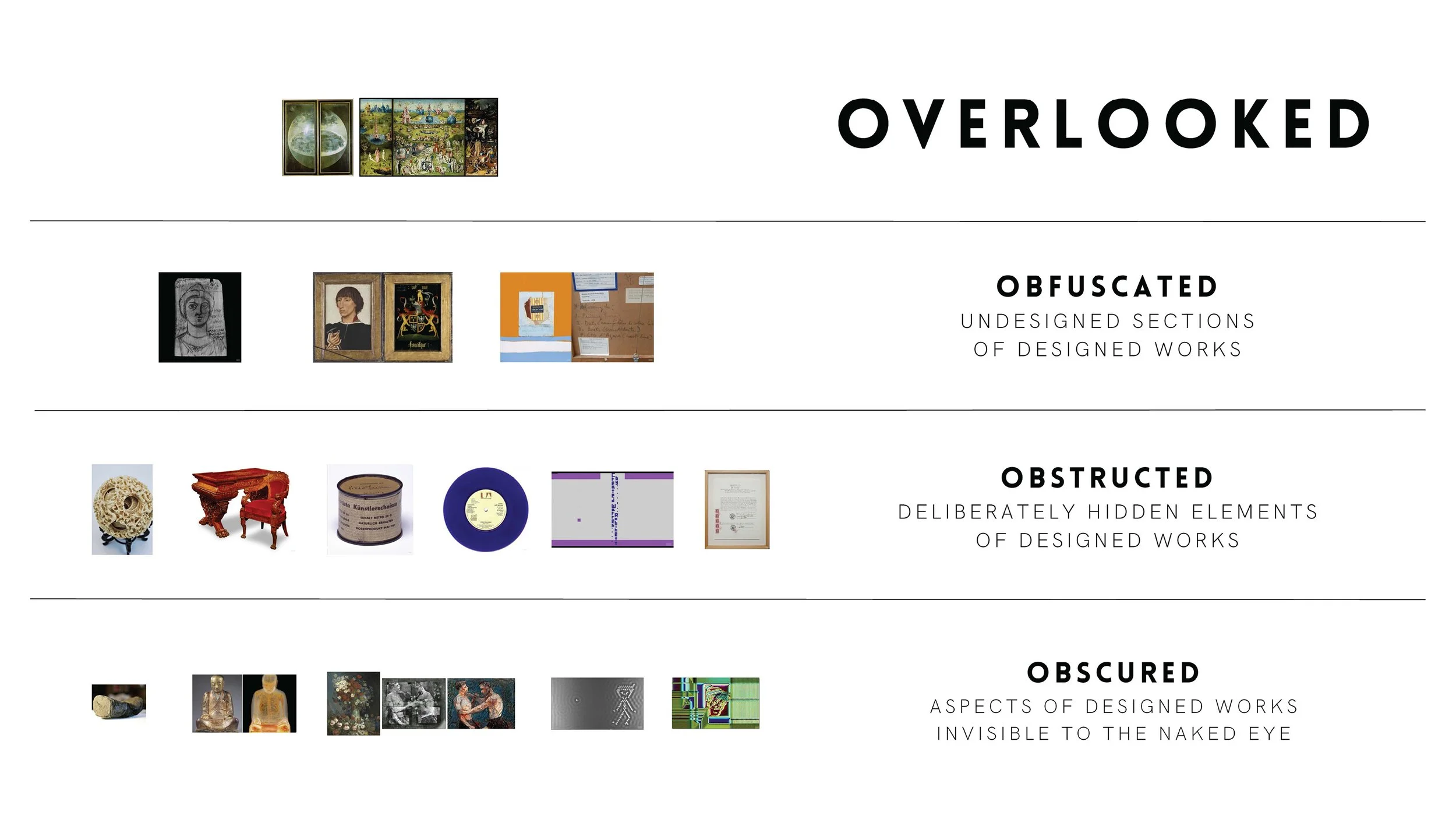
What may seem like a random menagerie of objects is connected through a common thread, that there is more than what meets the eye…
These works of art can be viewed and experienced in a plethora of ways. What brings them together is the 'unconventional narrative', which seeks to allow viewers to experience them from unorthodox perspectives and strange angles. The collection of objects crosses timelines and mediums to encourage exploration and discovery, allowing viewers to employ them to create their own connections.
The experience intends to create a sense of discovery. We want to inspire curiosity through careful observation and give the viewer a thrill of discovering something different, hidden or new. When they walk away from this exhibit, we like them to think about what they have yet to discover in the everyday objects they encounter hiding under their noses or even in plain sight.
For example,
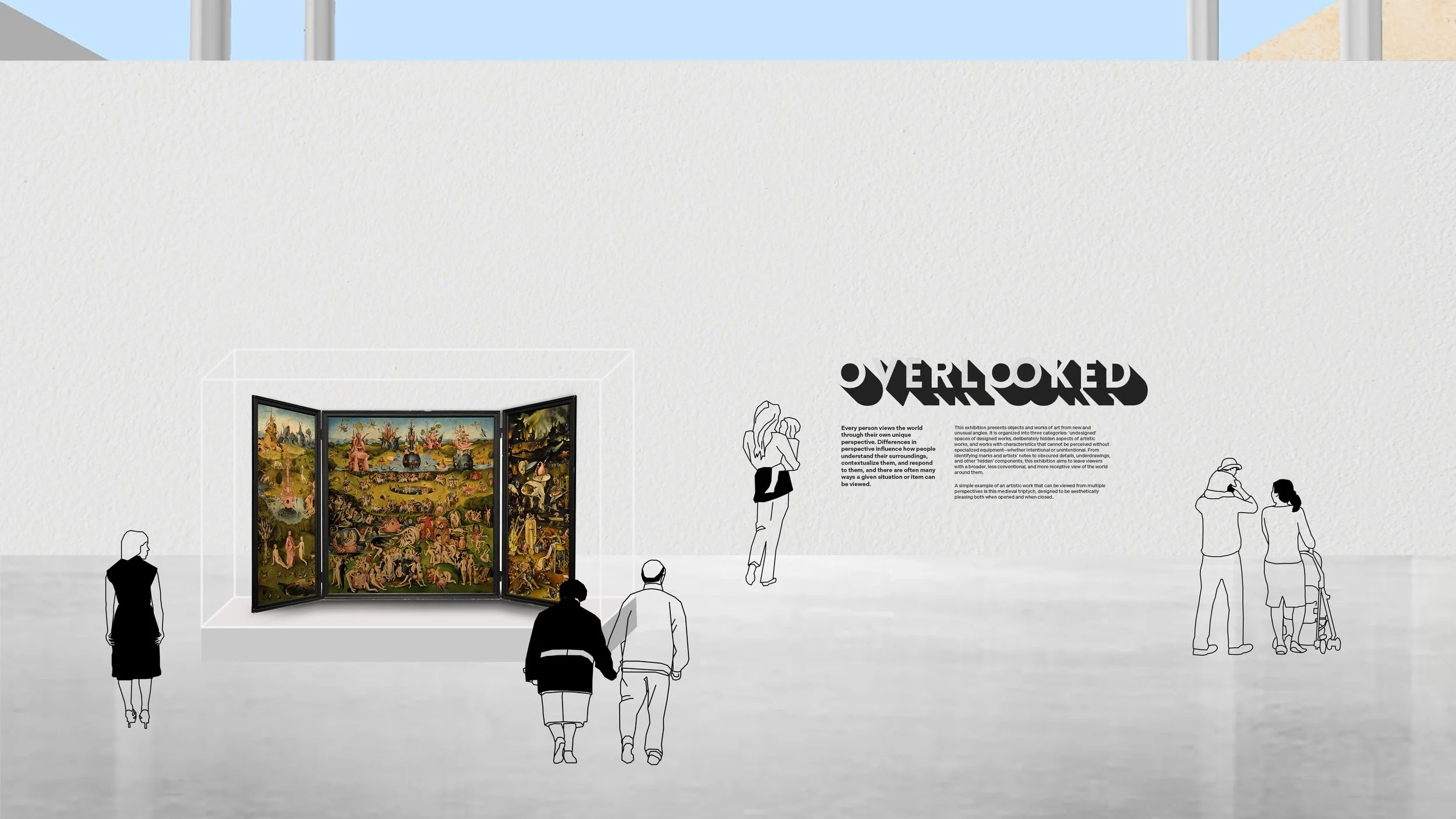
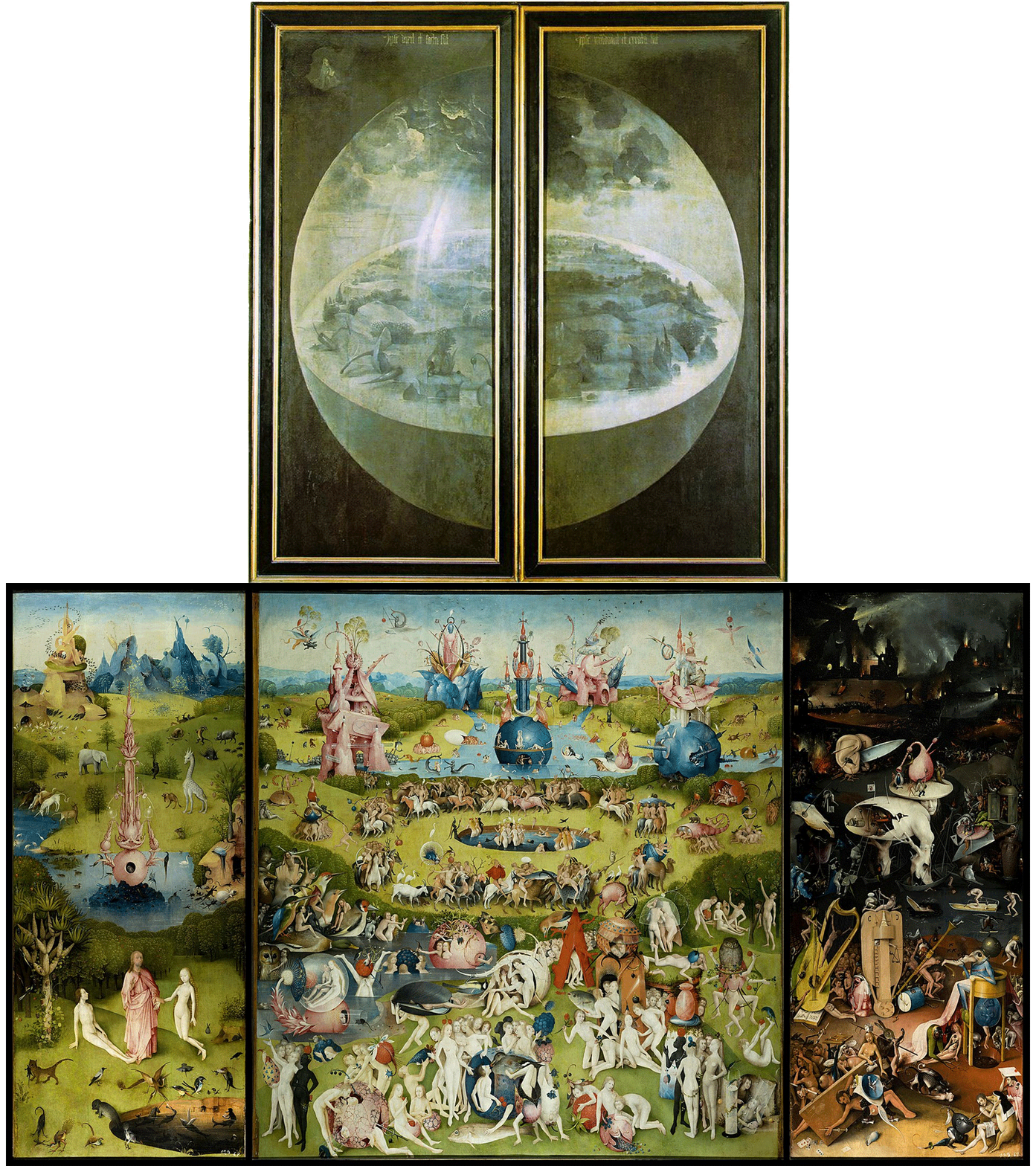
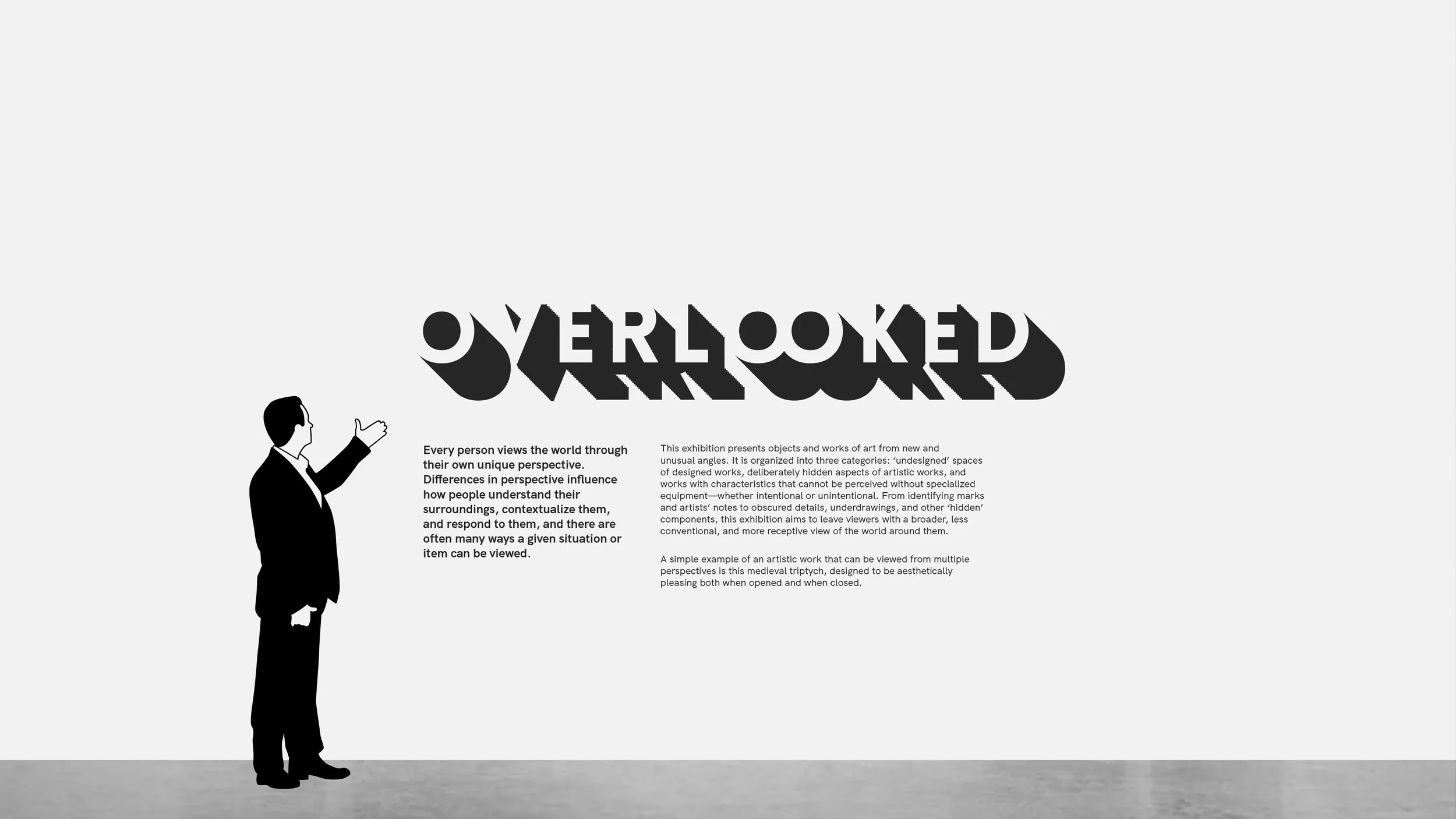
The Garden of Earthly Delights is our Overlooked introductory object. It is fairly well-known and a simple example of the exhibition concept.
It is a triptych whose doors open up to Eden. Most viewers are familiar with the interiors, but what is lesser known is the outside doors that portray the Third Day of Creation of the World.
The Garden of Earthly Delights
Hieronymus Bosch (Dutch)
1490 – 1500
Oak, oils in shades of grey (grisaille)
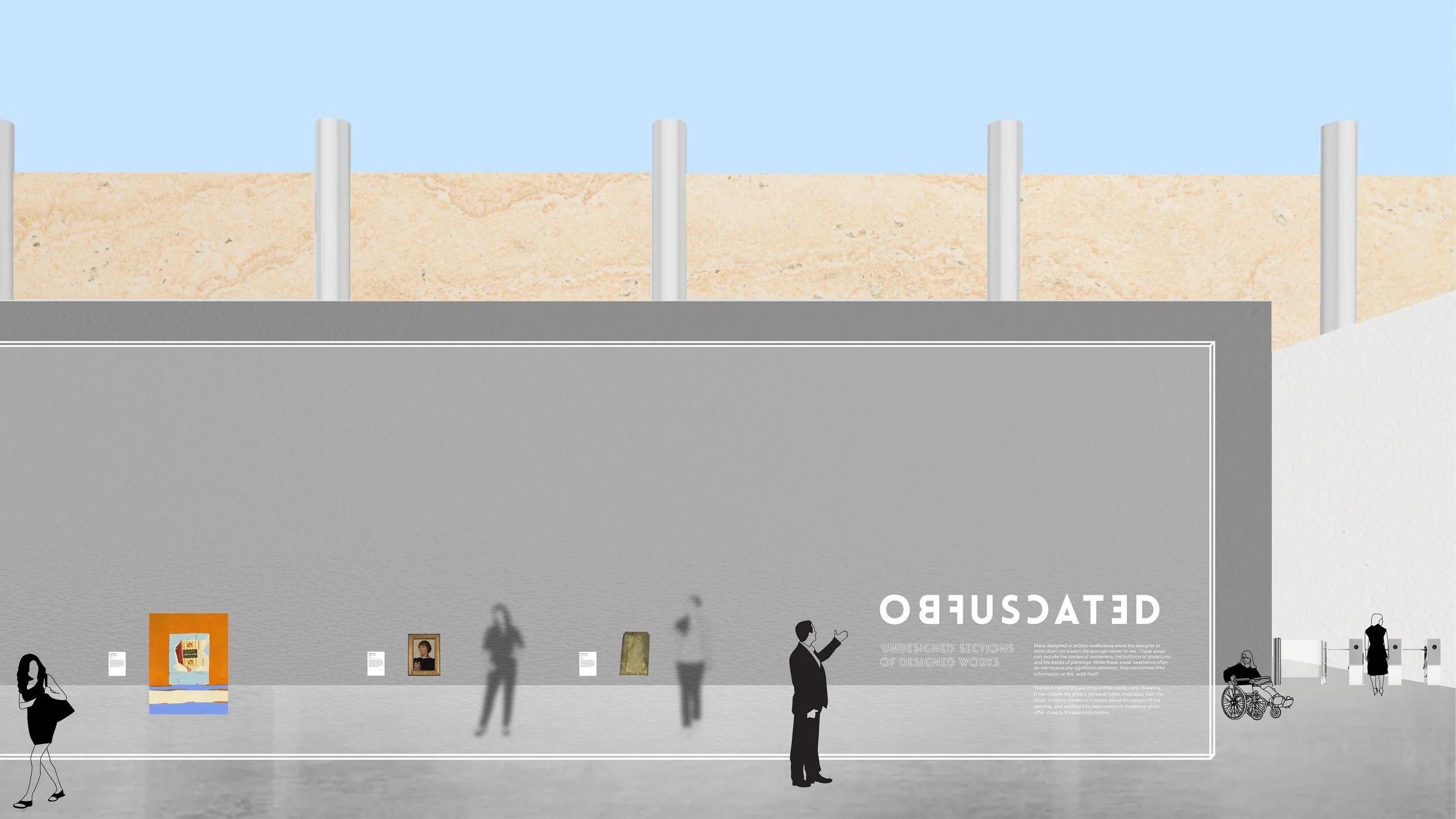
For Obfuscated,
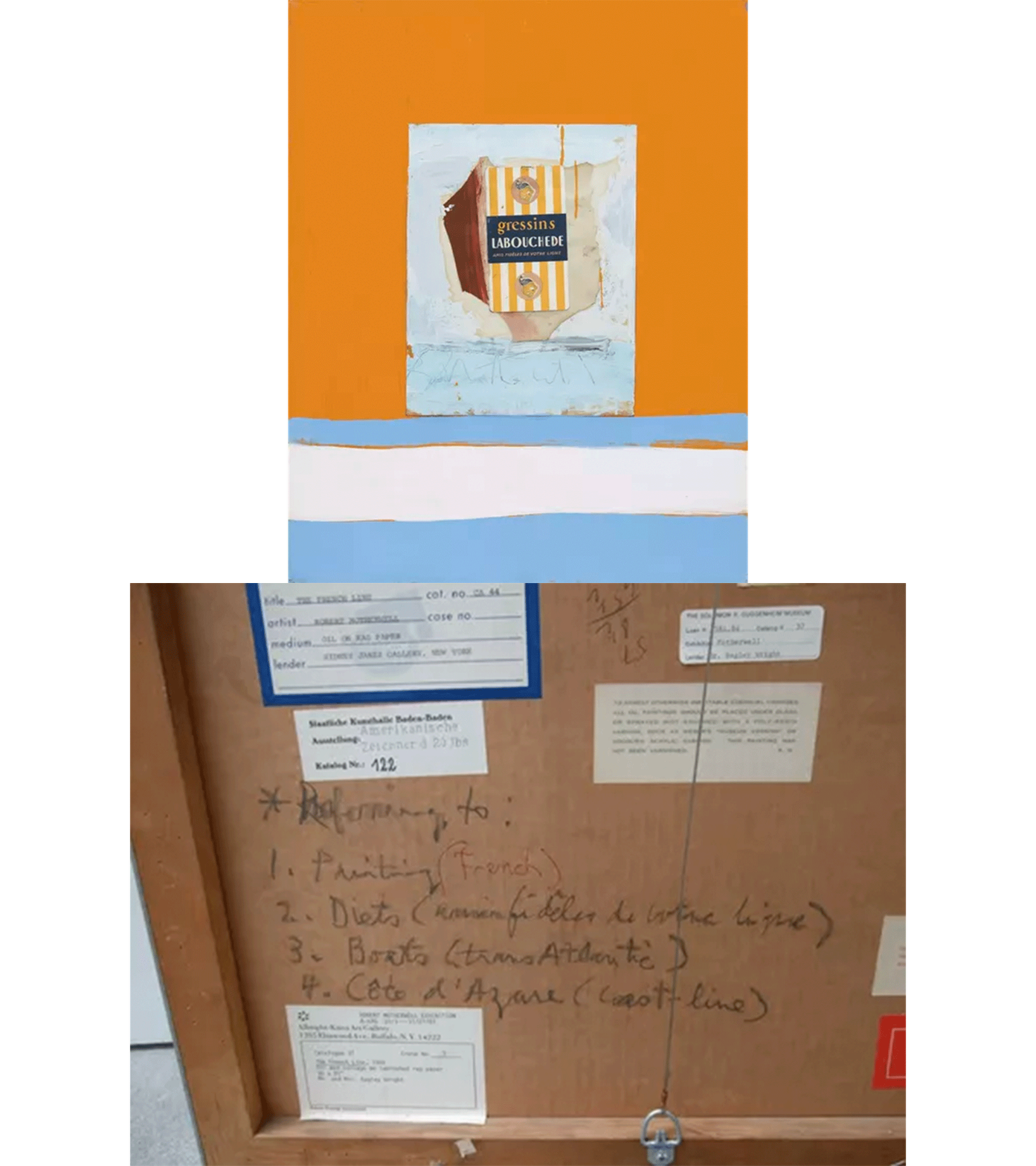
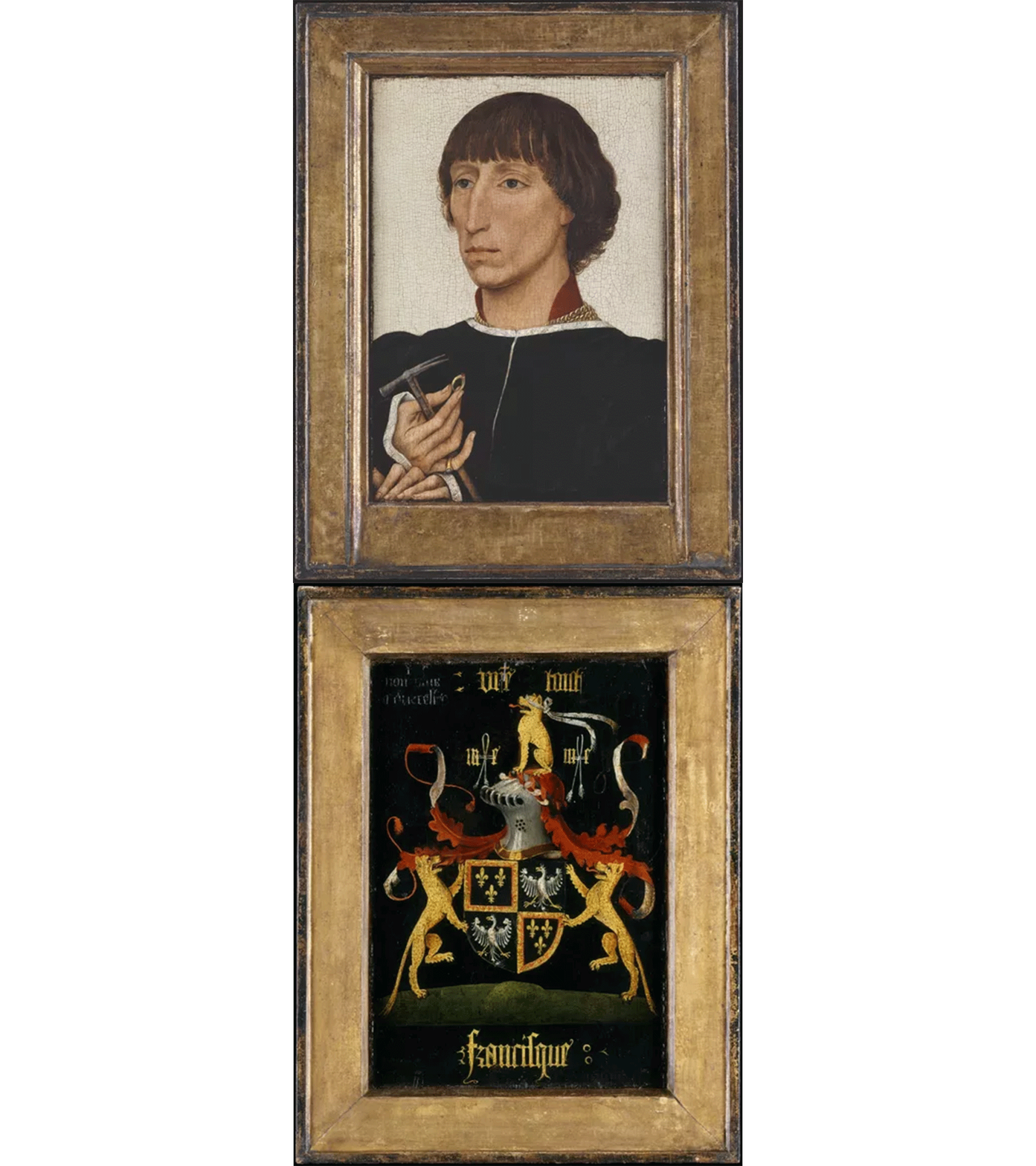
these objects are designed works that have not only a recto (front) but also a verso (back). The recto is seen by most viewers but not necessarily the verso.
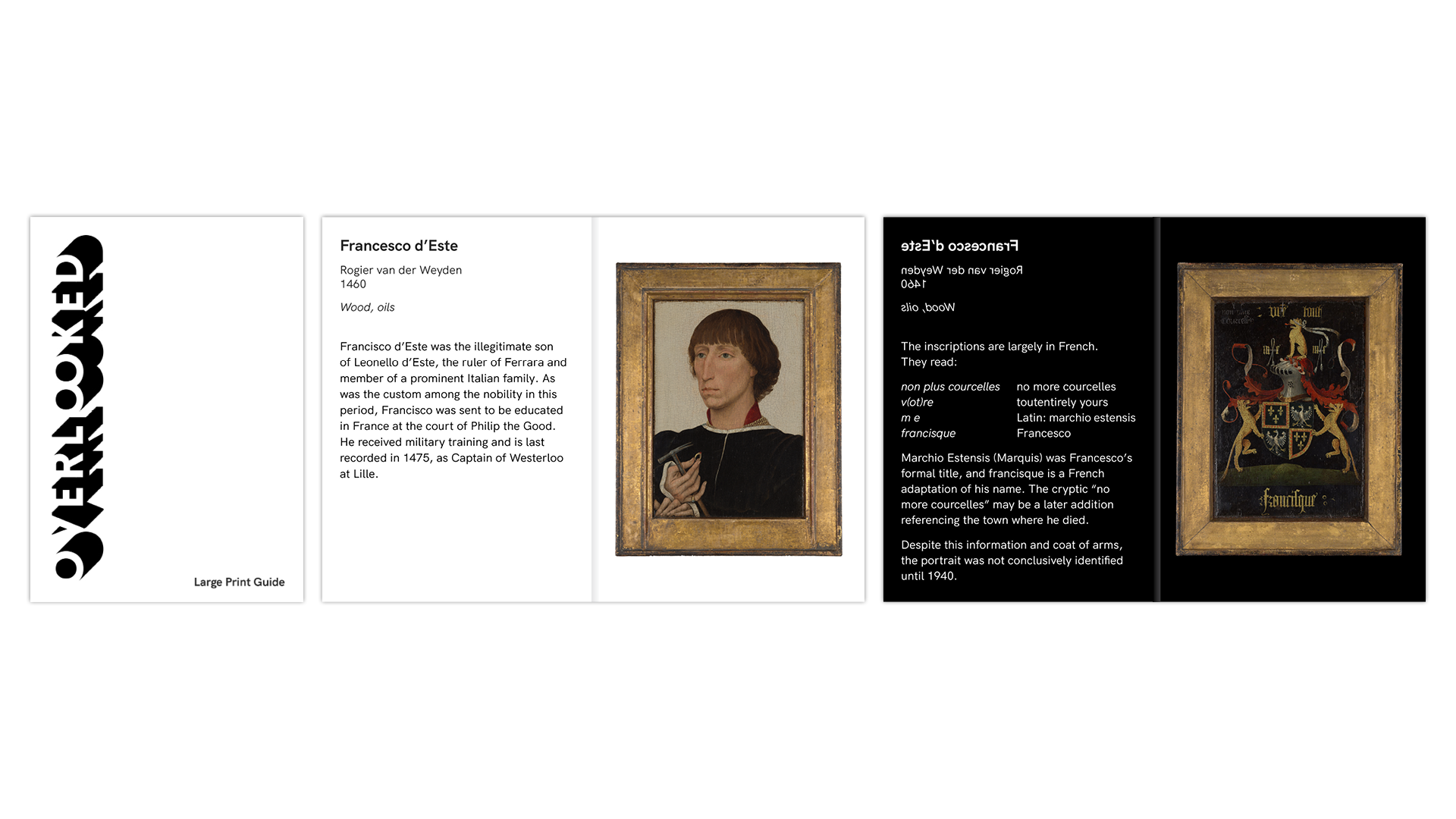
Francesco d’Este
Rogier van der Weyden
c. 1460
Wood, oils
The French Line
Robert Motherwell
1960
Oil, paper, and graphite on board
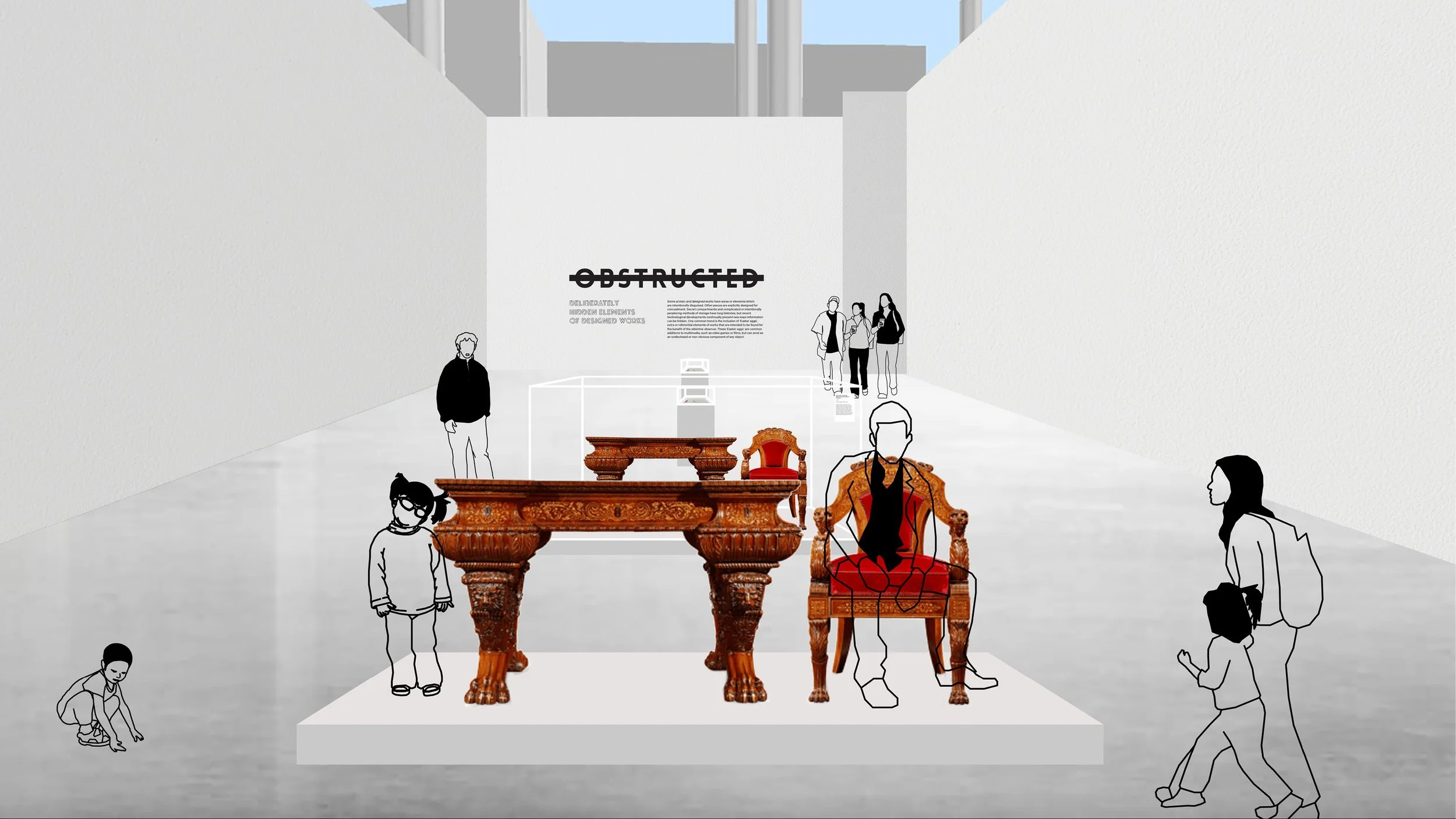
For Obstructed,
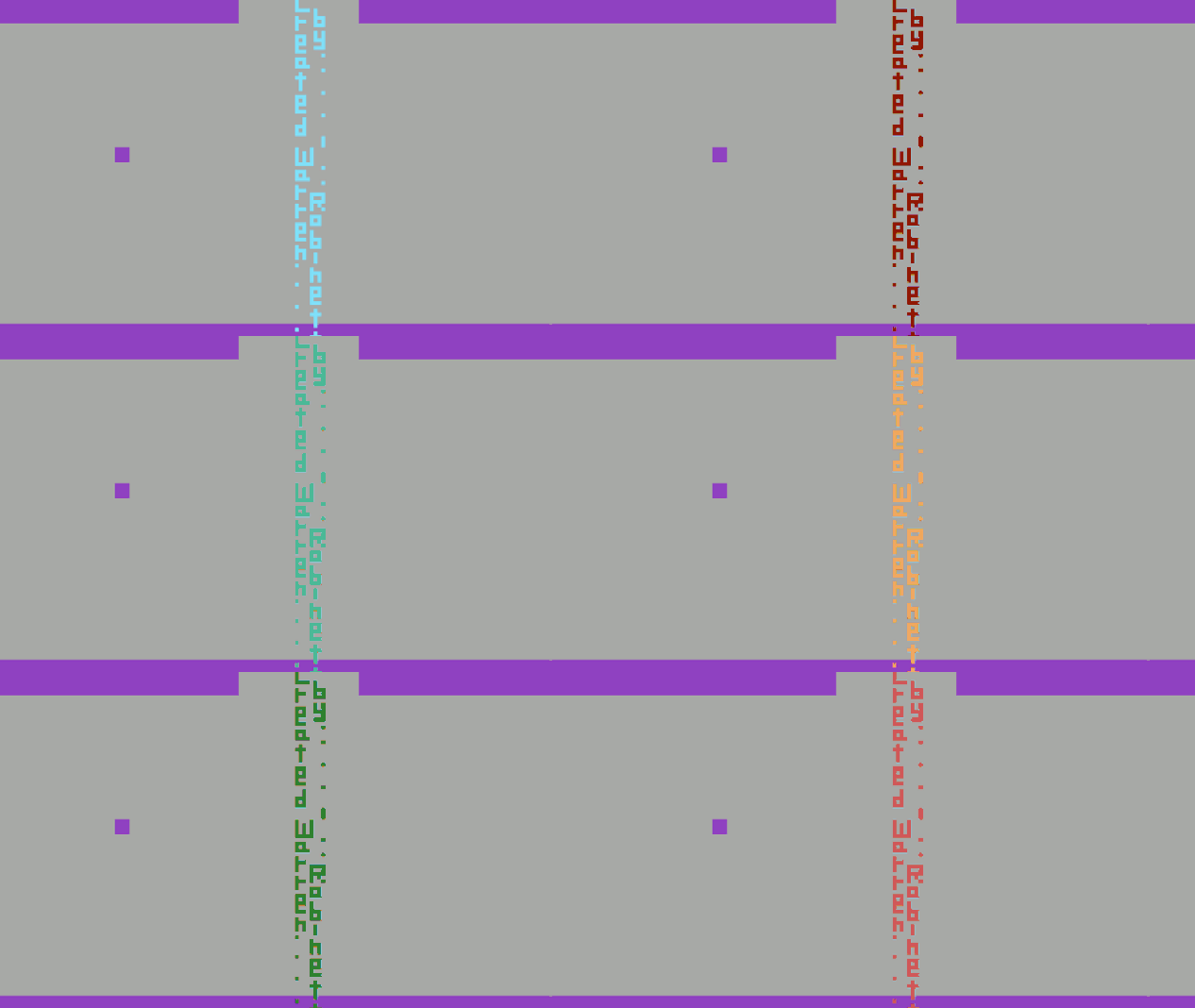
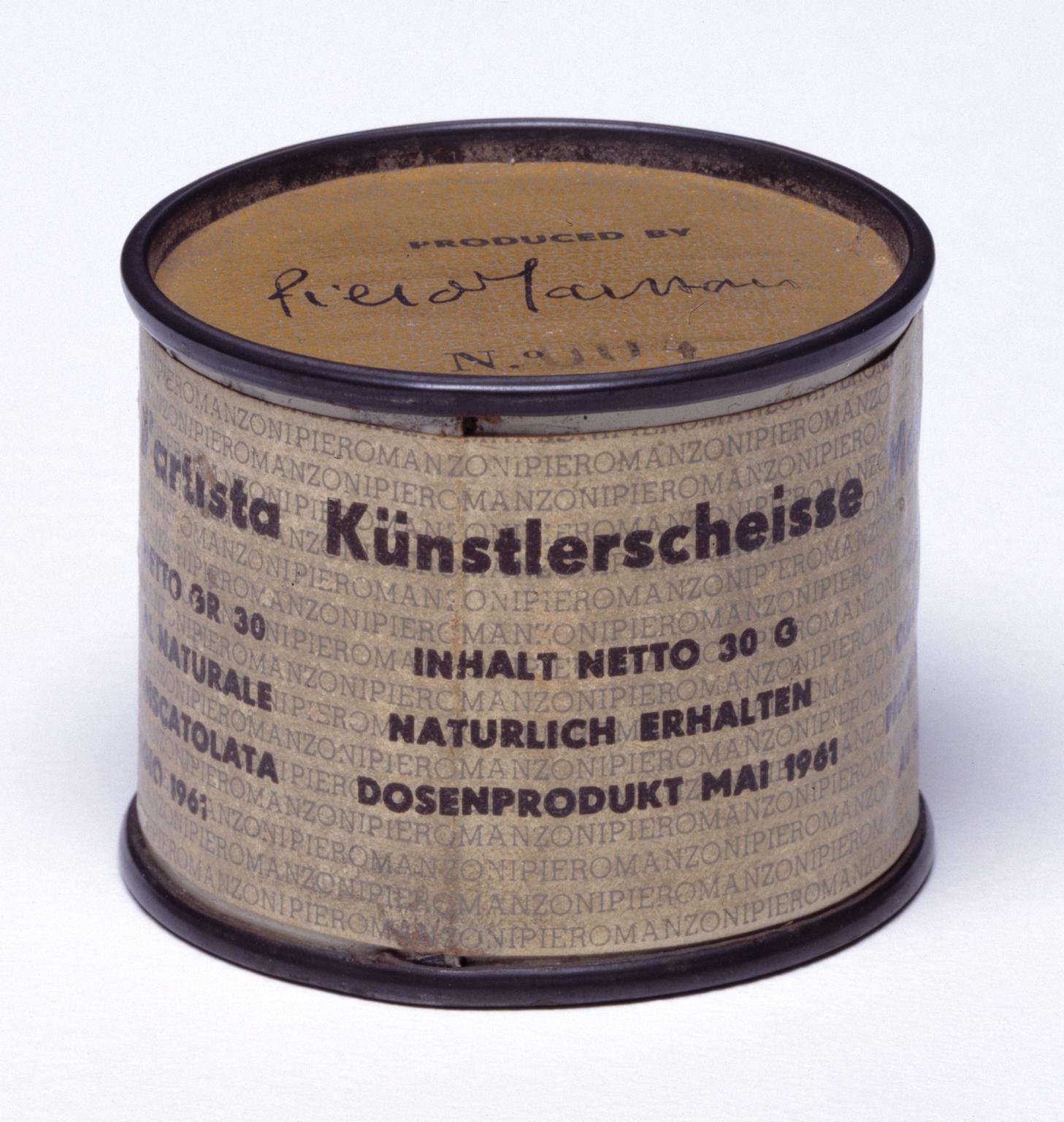
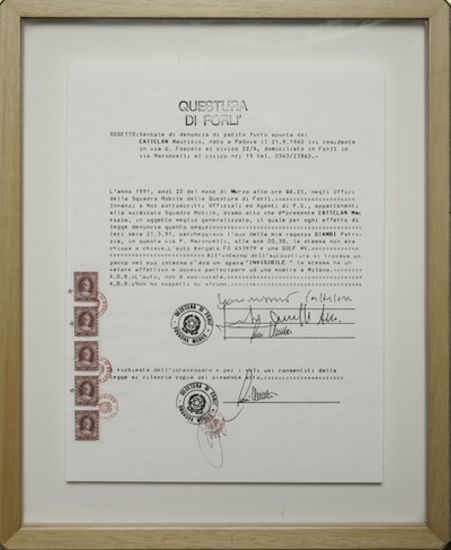
these works contain elements deliberately hidden from view, though the reasons for this design choice differ between works.
Royal Italian writing desk
Made for King Carlo Alberto I of Sardinia
c. 1840
Carved mahogany, fabric, brass
Adventure
Warren Robinett
1979
ABS (plastic) shell, microchips (silicon, aluminum)
Artist’s shit
Piero Manzoni
1961
Aluminum, paper, human excrement
Untitled
Maurizio Cattelan
1991
Paper, ink
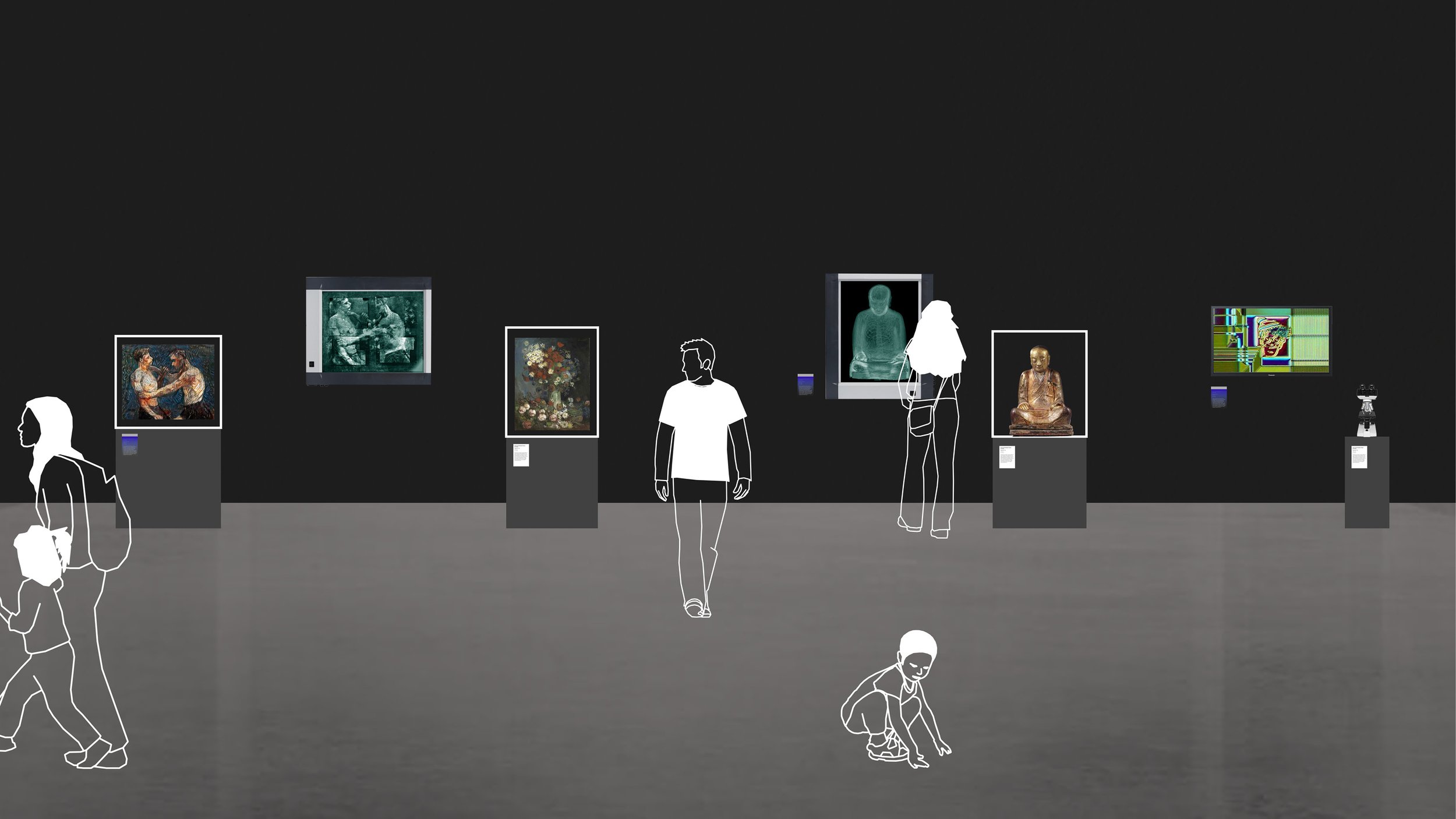
For Obscured,
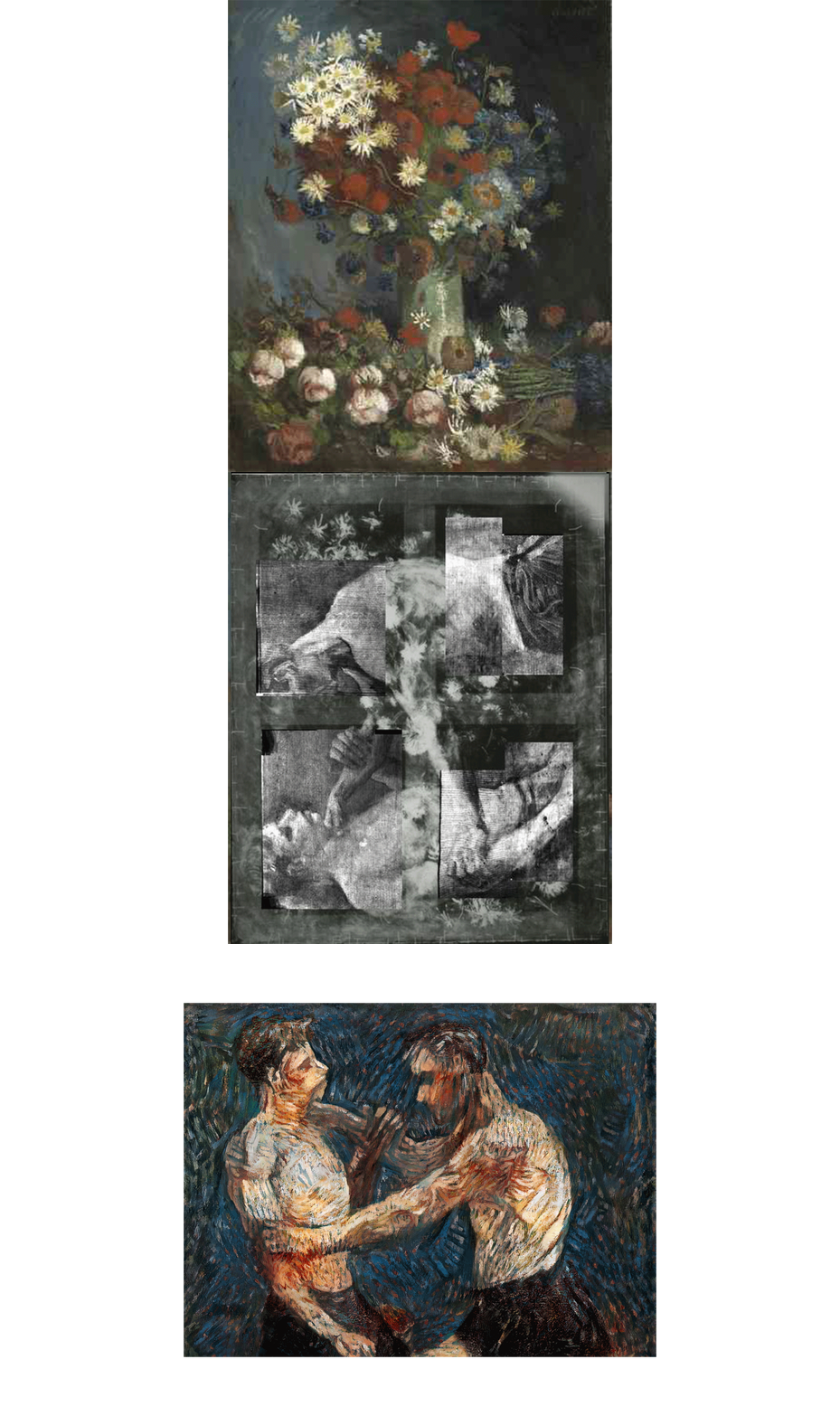
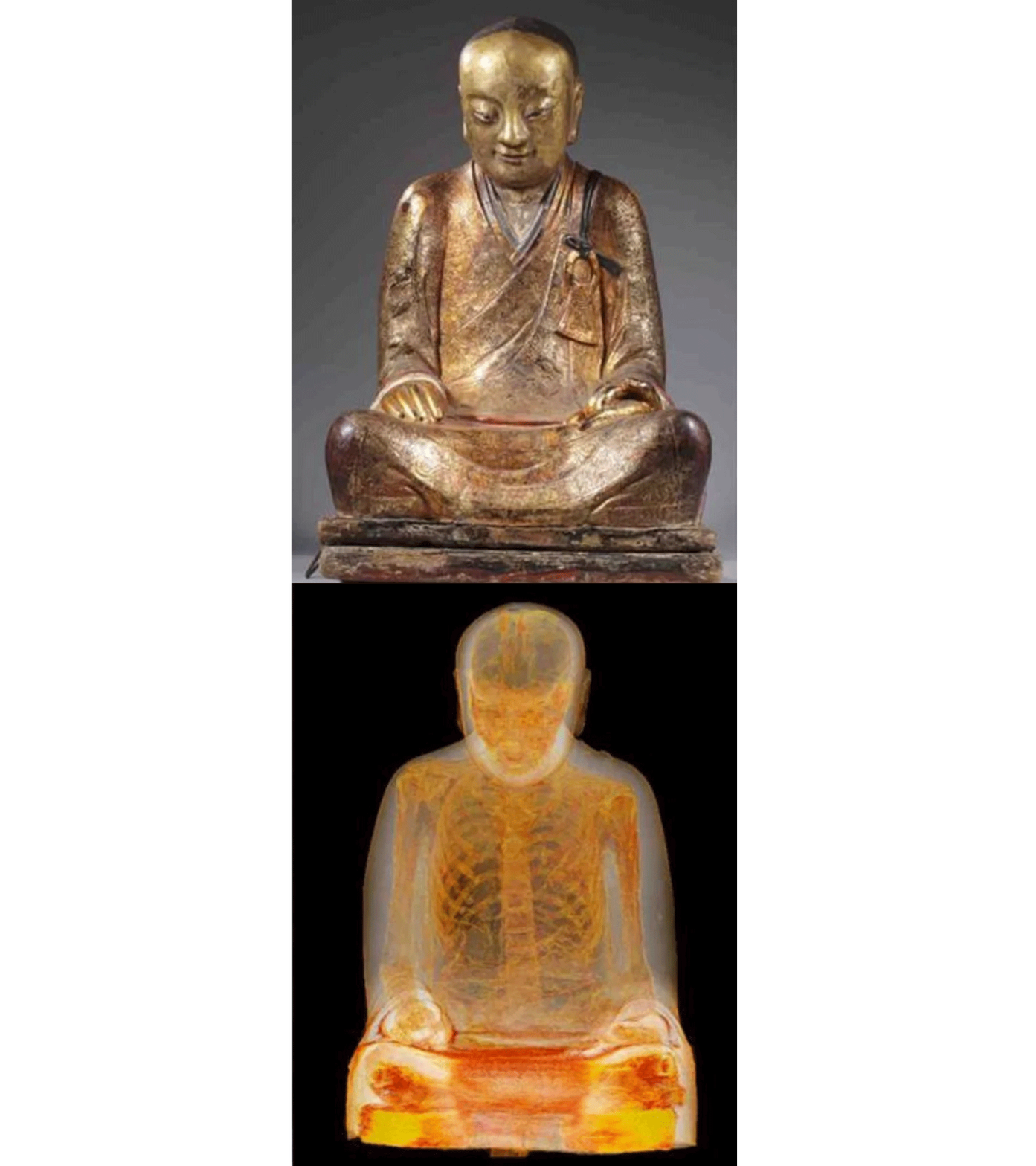
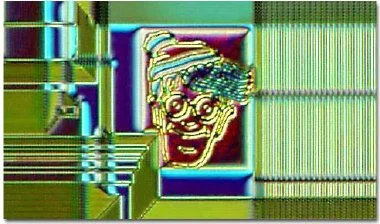
these objects each have aspects that are not visible to the naked eye. They can only be viewed through the use of specialised equipment. The ‘invisible' components were not made for concealment but rather because of practical necessity, traditional practice, and cosmic accident.
A Boy and His Atom
Andreas Heinrich, Chris Lutz, Susanne Baumann, and Ileana Rau (IBM)
2013
Carbon monoxide molecules (digital)
Still Life with Meadow Flowers and Roses
Vincent Van Gogh 1886-1887
Oil, canvas
Buddha sculpture
Unknown
1272 - 1284
Papier-mâché, lacquer, paint
MIPS R4000 (microcprocessor)
Kevin Kuhn, mask designer
Late 1980s or early 1990s
Silicon, aluminum
Together these objects form the basis of our exhibition.
The branding utilises a black-and-white colour palette to highlight the dual nature of the obvious and not obvious aspects of the objects. Simple and minimalistic it pays homage to the White Cube Aesthetics while employing playful typography to convey the themes.

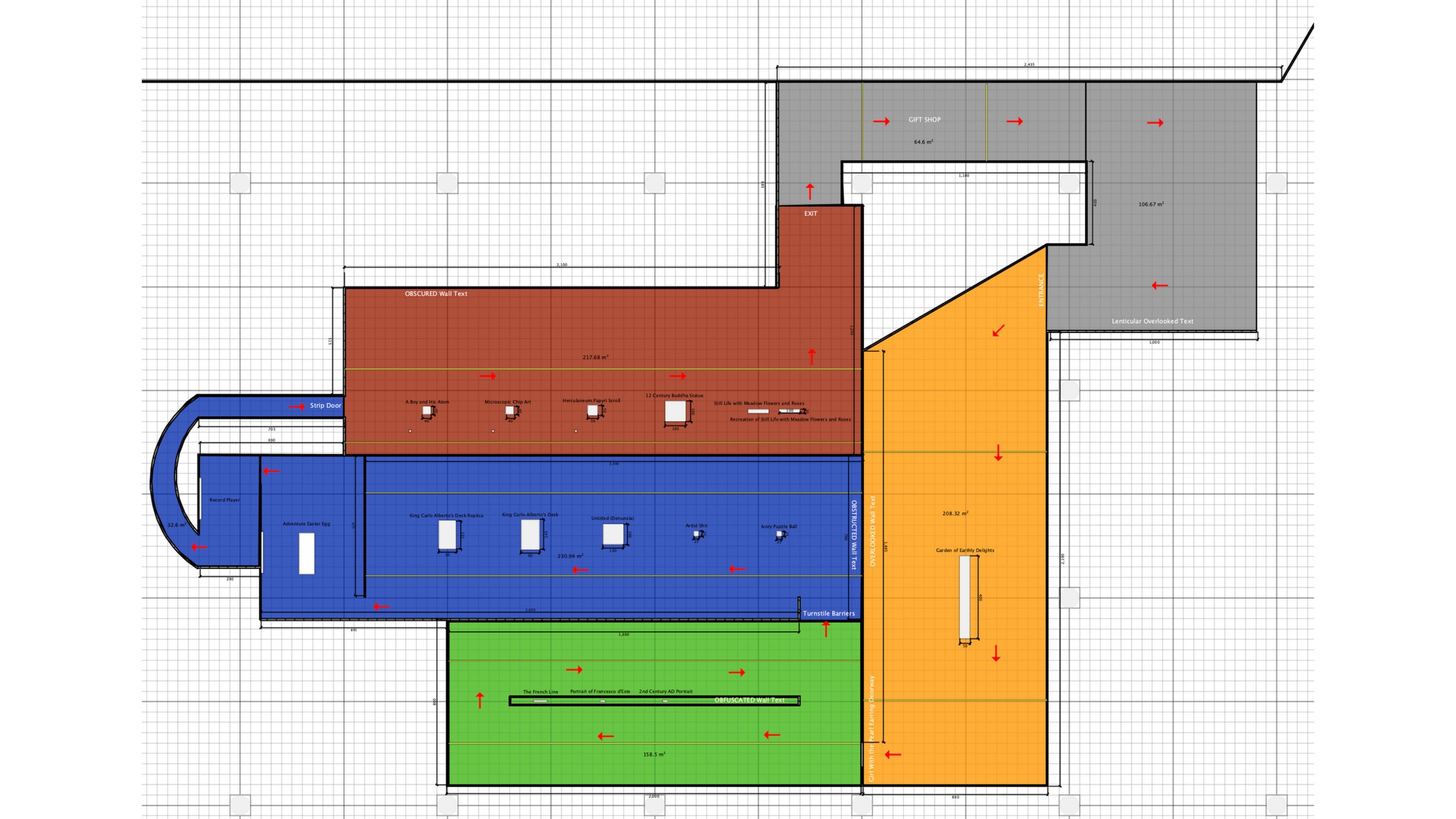
Divided into four zones, the exhibition takes you through each theme, starting from the introductory piece of The Garden of Earthly Delights to the highly sophisticated technology of Obscured.
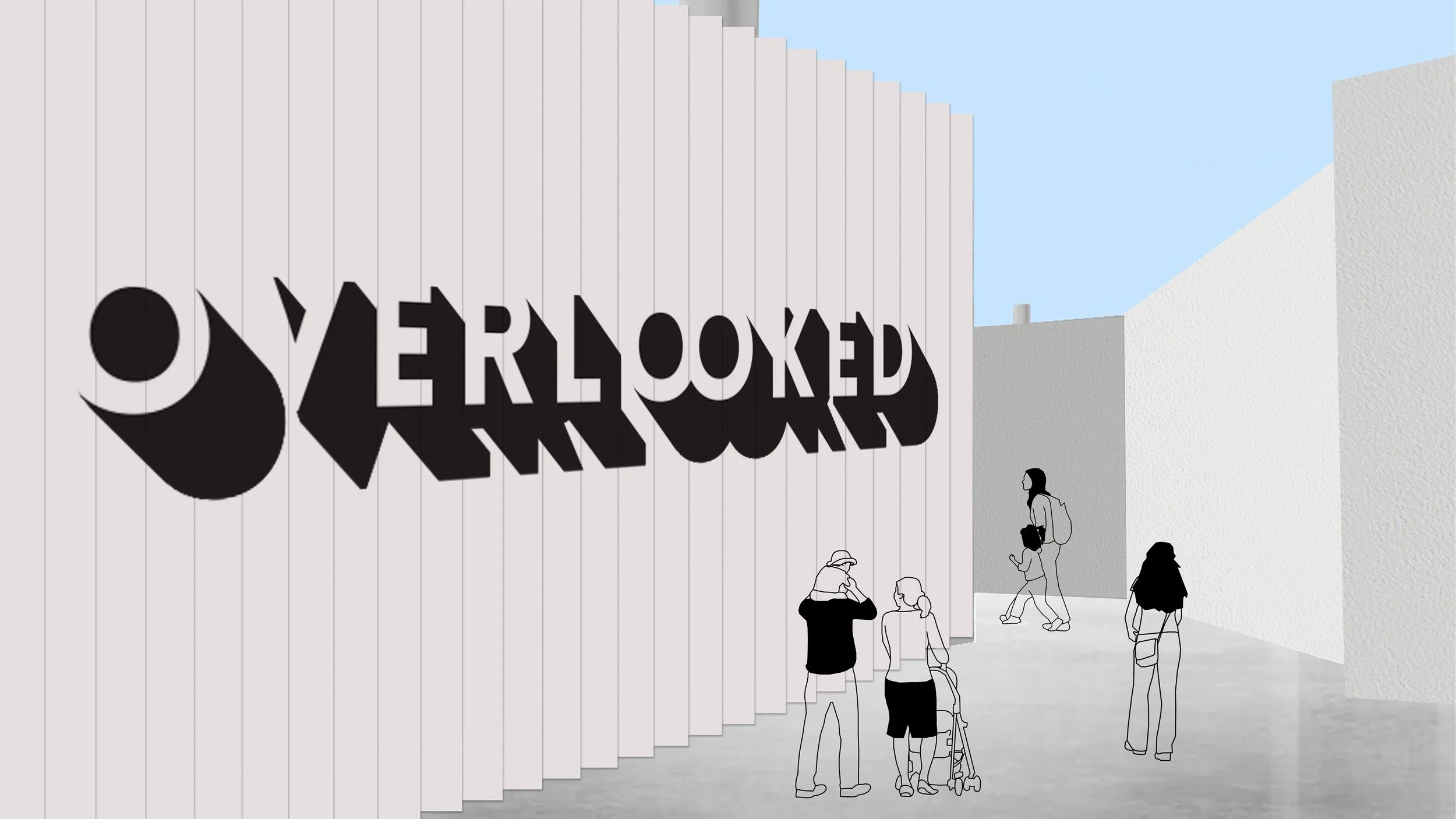
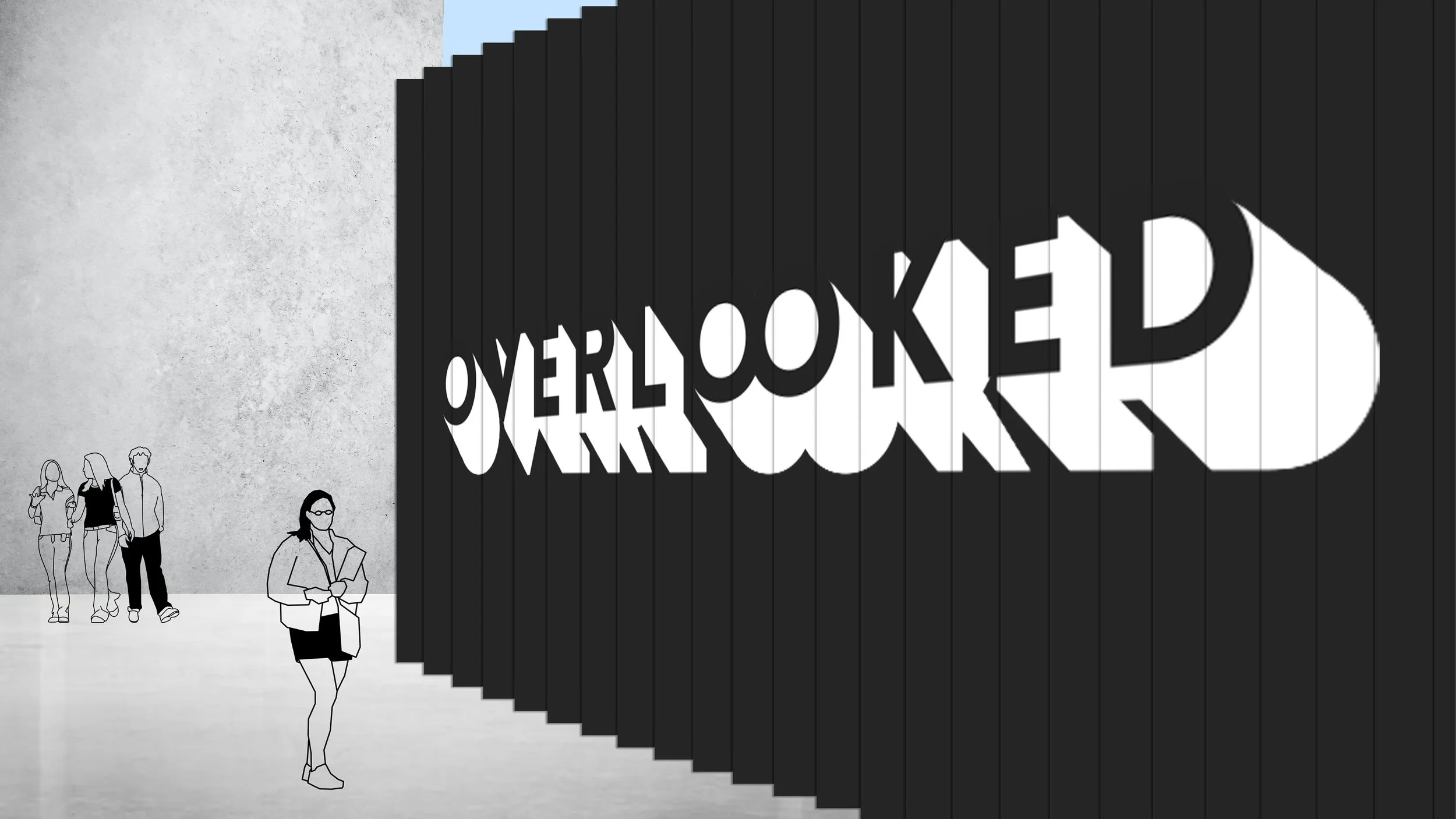
A lenticular entrance introduces viewers to the concept of looking at the works from different perspectives.
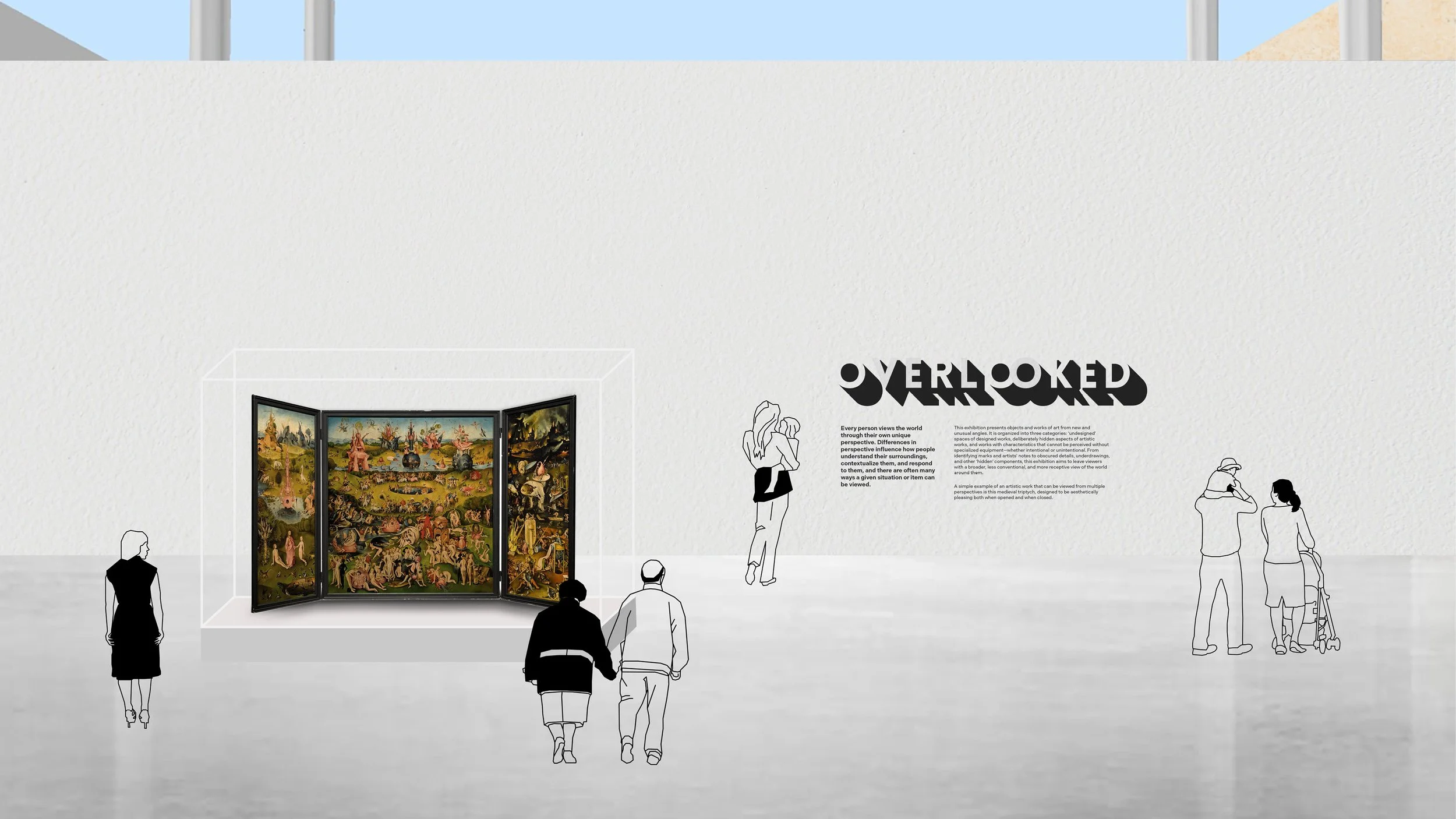
Translucent glass shows the recto and verso of the works of Obfuscated.

Interactive replicas bring the joy and delight of finding the hidden compartments of King Carlo’s desk.
Obscured is a dark space to reflect the idea of using technology to view hidden aspects of the work that are not visible to the naked eye.
The materiality of the theme panels pay homage each theme’s concept.
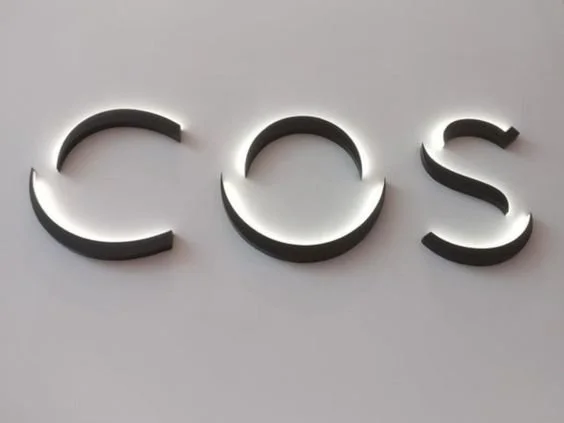
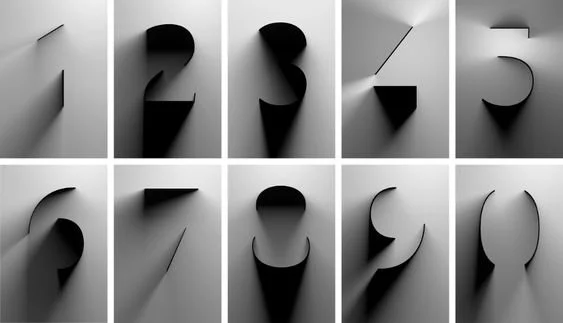
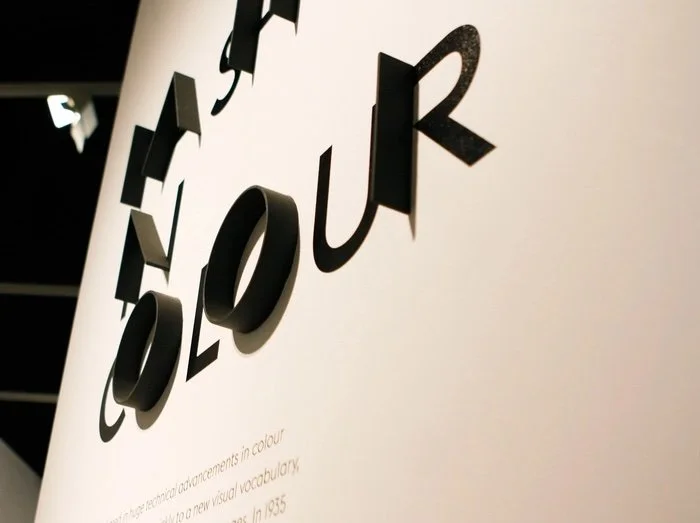
For Overlooked, 3D shadow signage utilised on the title treatment
Reference images (These Cleverly Designed Logos Are the Satisfaction You Need in This Nonsense World, 2019), (Frumhoff, n.d.)
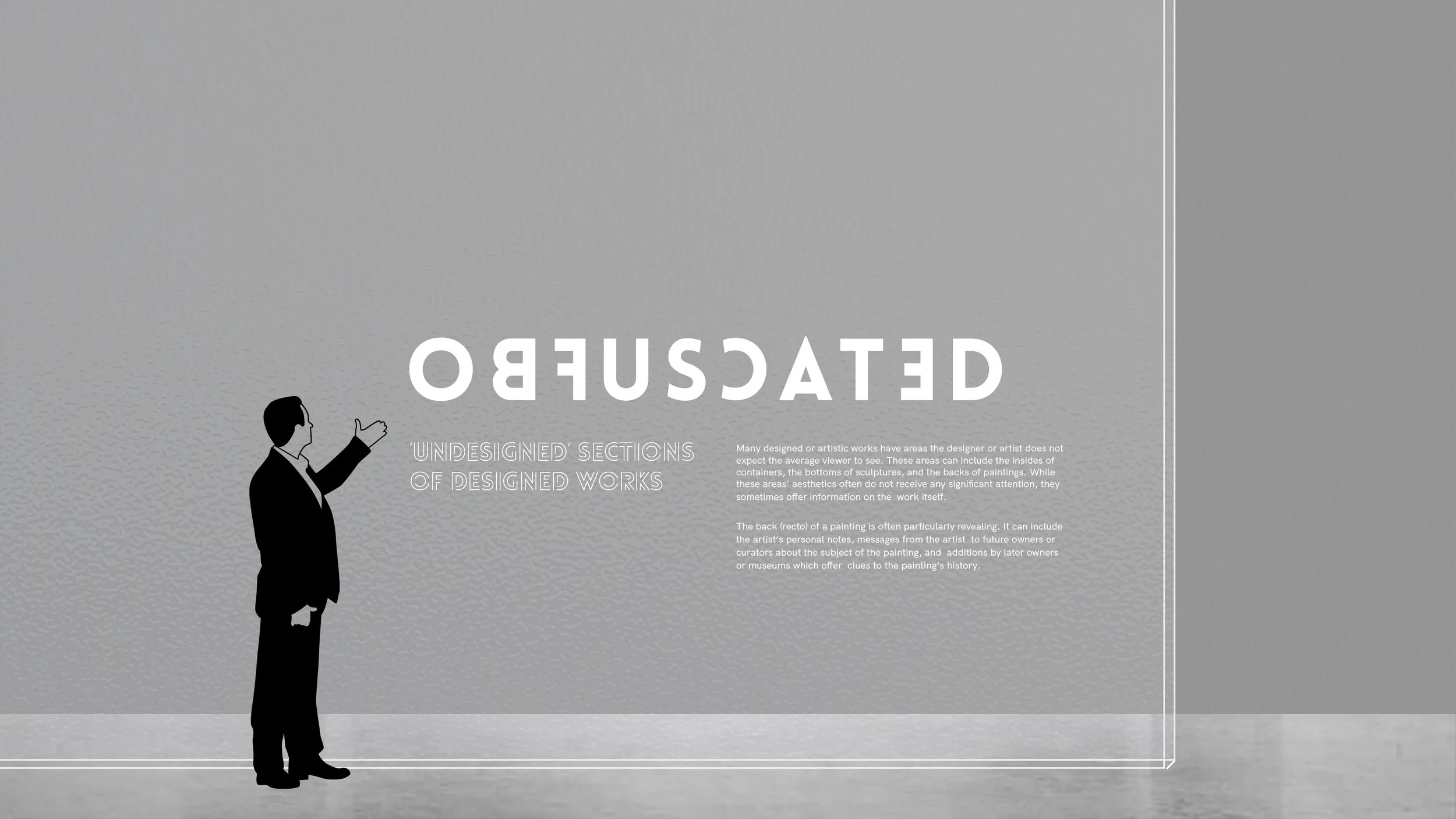
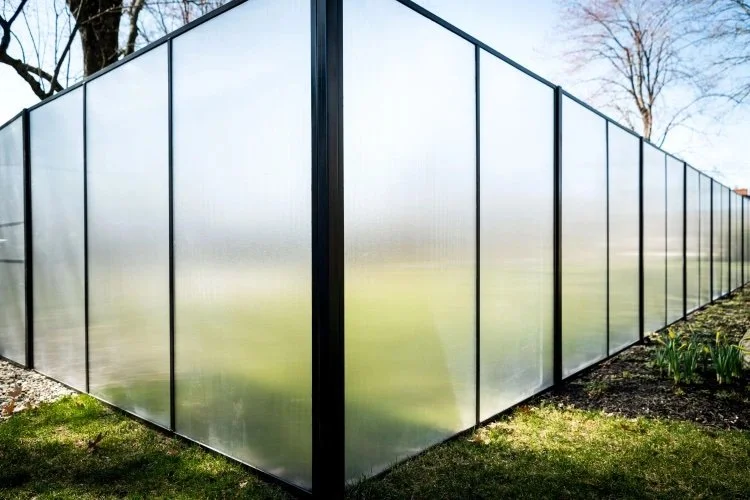
For Obfuscated, text is printed on a translucent wall to encourage viewing on both sides.
Reference image (Polycarbonate Fence, Custom PolycarbonateSupplier, n.d.)
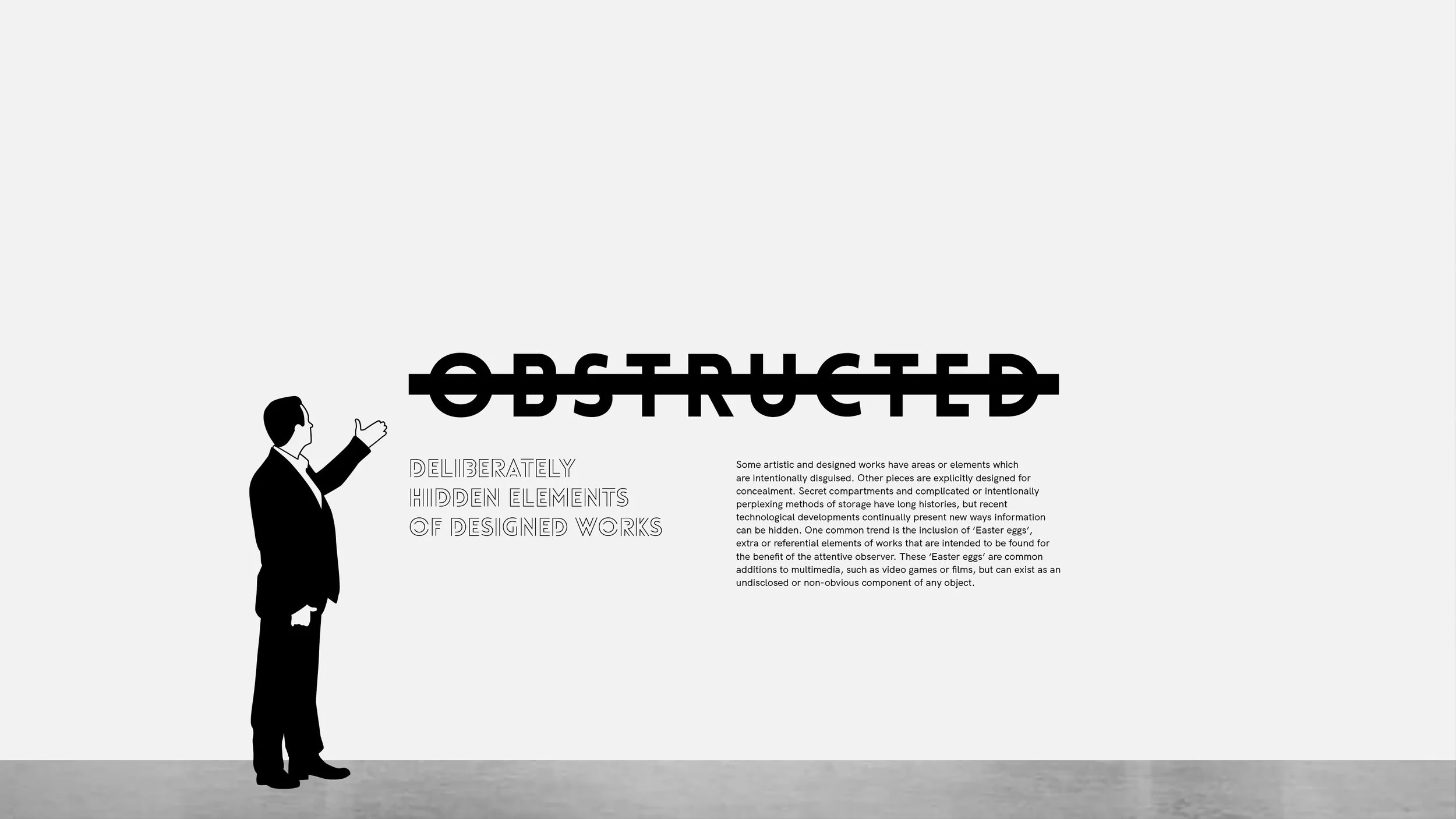
For Obstructed, a raised bar will ‘obstruct’ the title.
Reference image (Sancho, 2015)
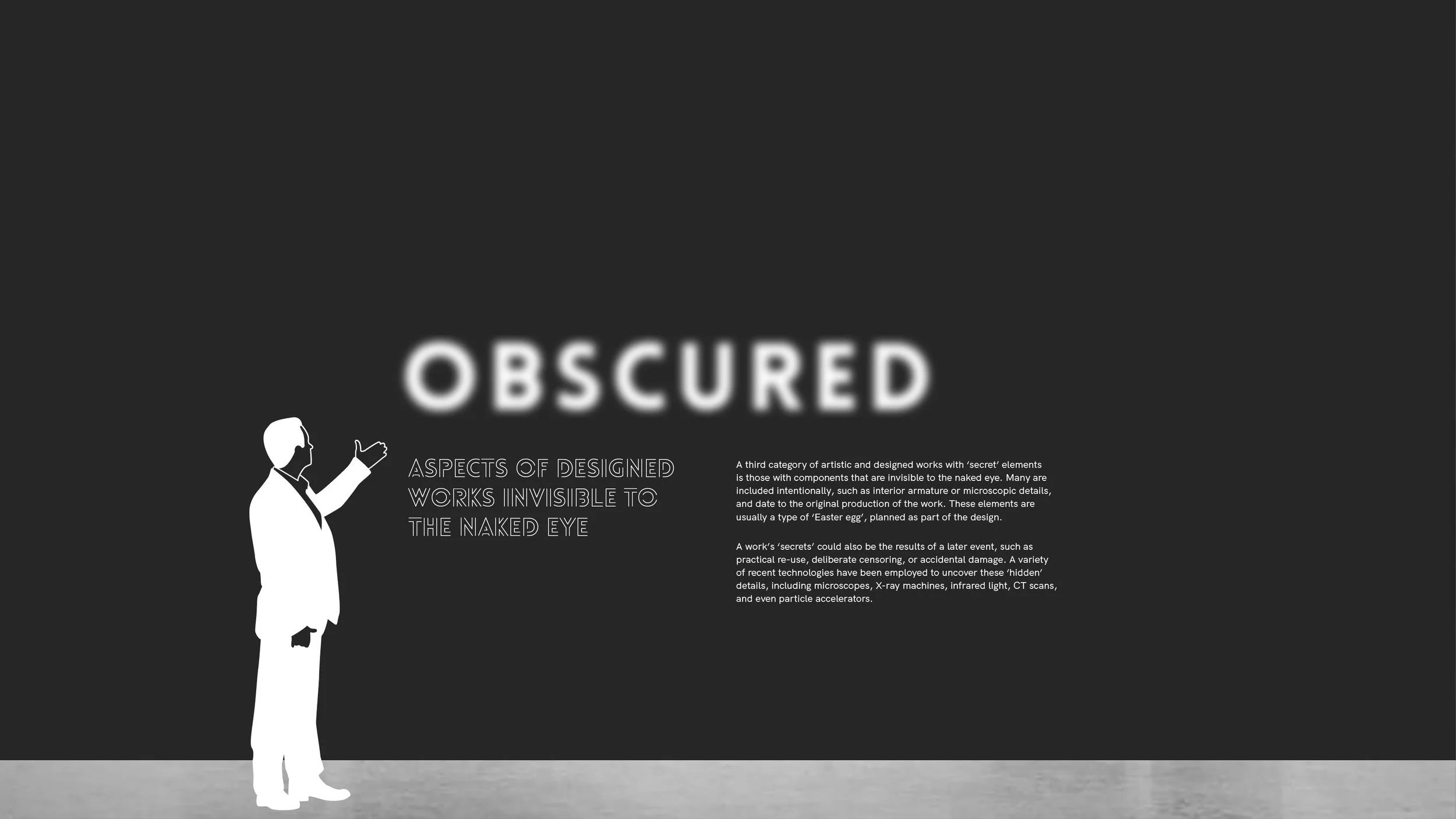
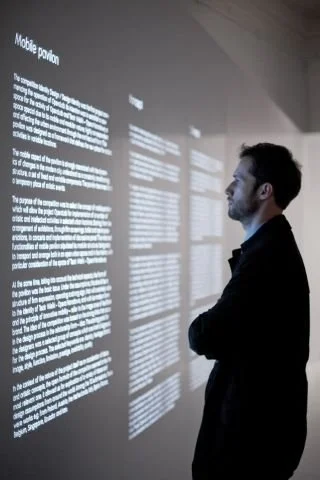
For Obscured, where specialist equipment is needed to view the work, the text will be projected onto a black wall.
Reference image (OperaLab Exhibition by Bridge | Museum Exhibition Design, Exhibition, Exhibition Design, n.d.)
A dual-label system has been developed for each object. White addresses the most common view of the work and black addresses the more detailed, or uncommon perspective.
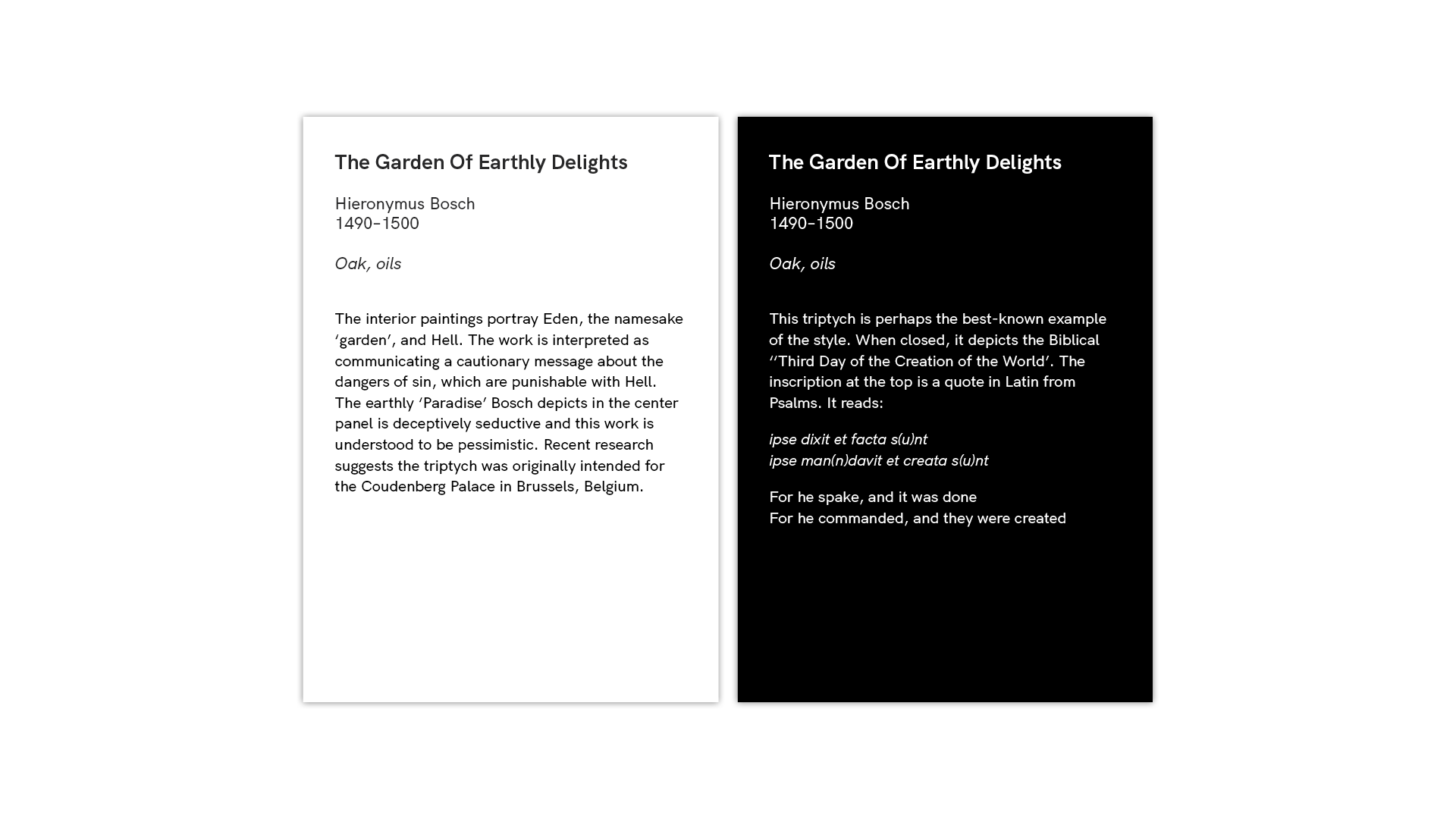
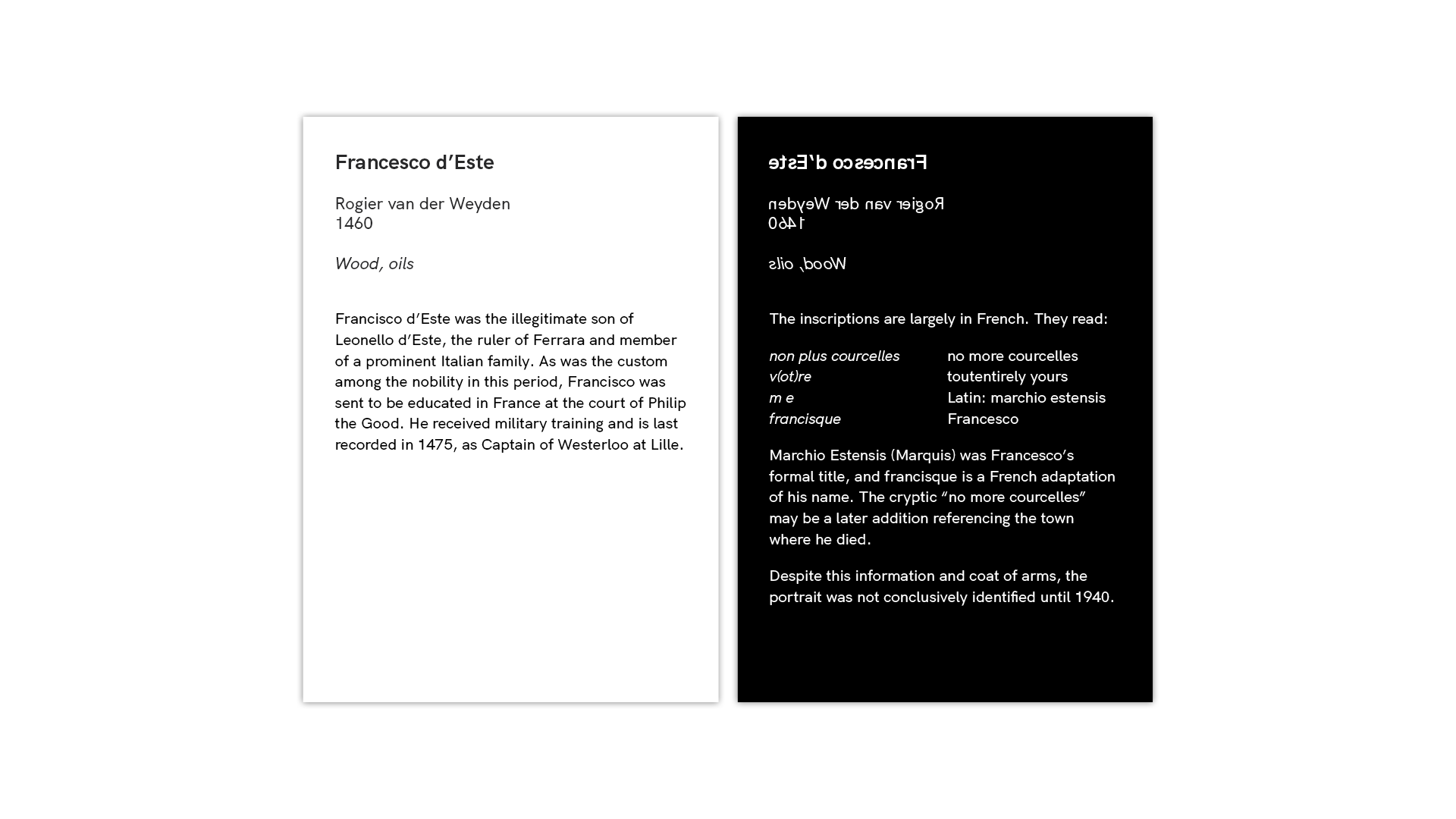
The Obfuscated label has its tombstone information mirrored on the verso label. These labels are printed double-sided.
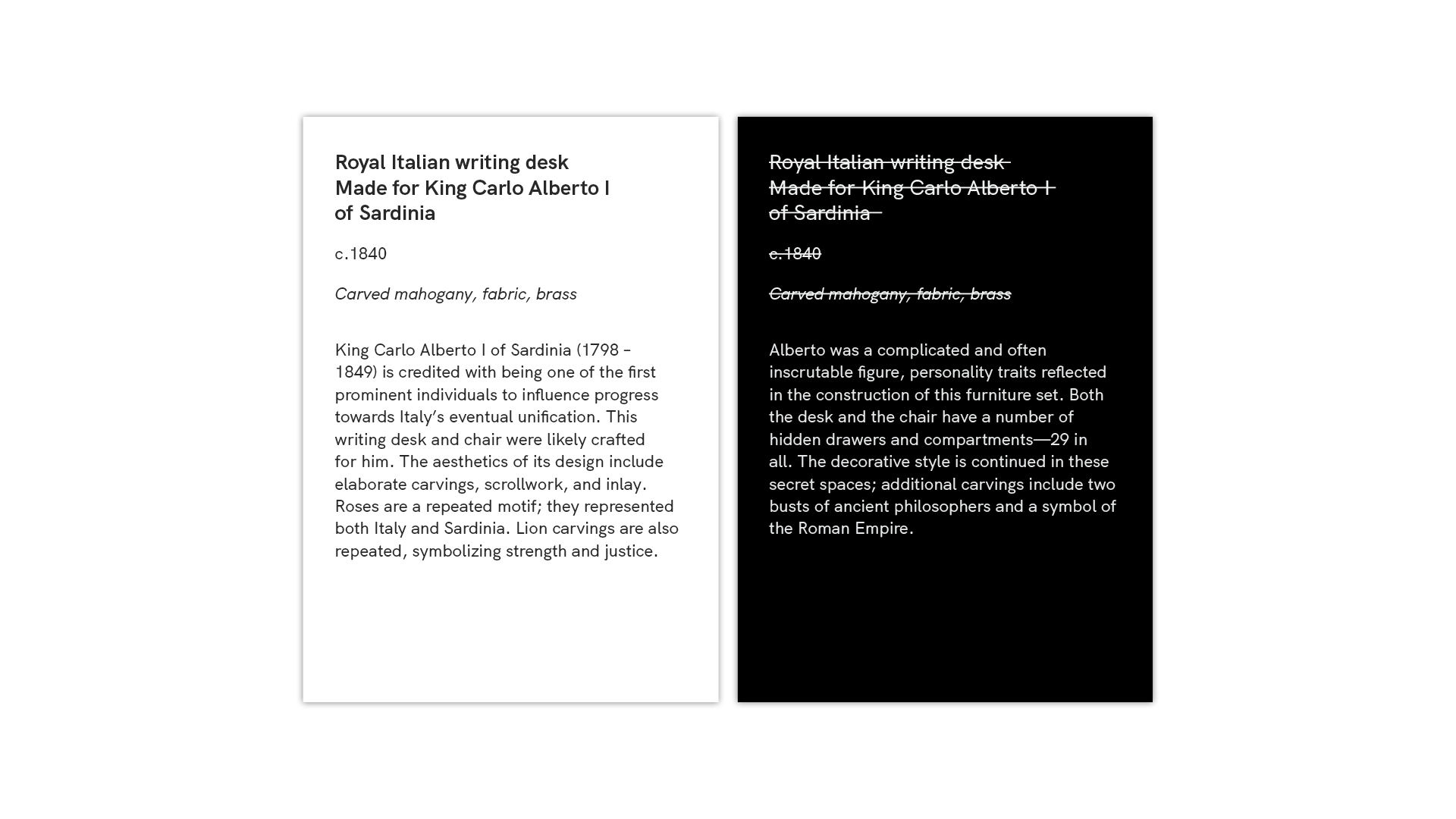
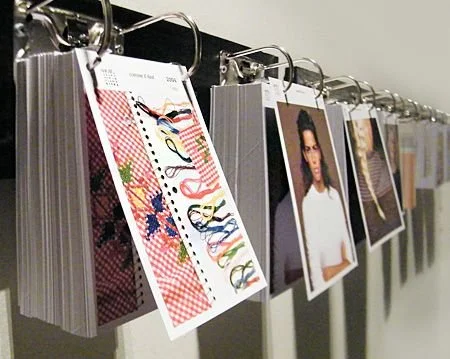
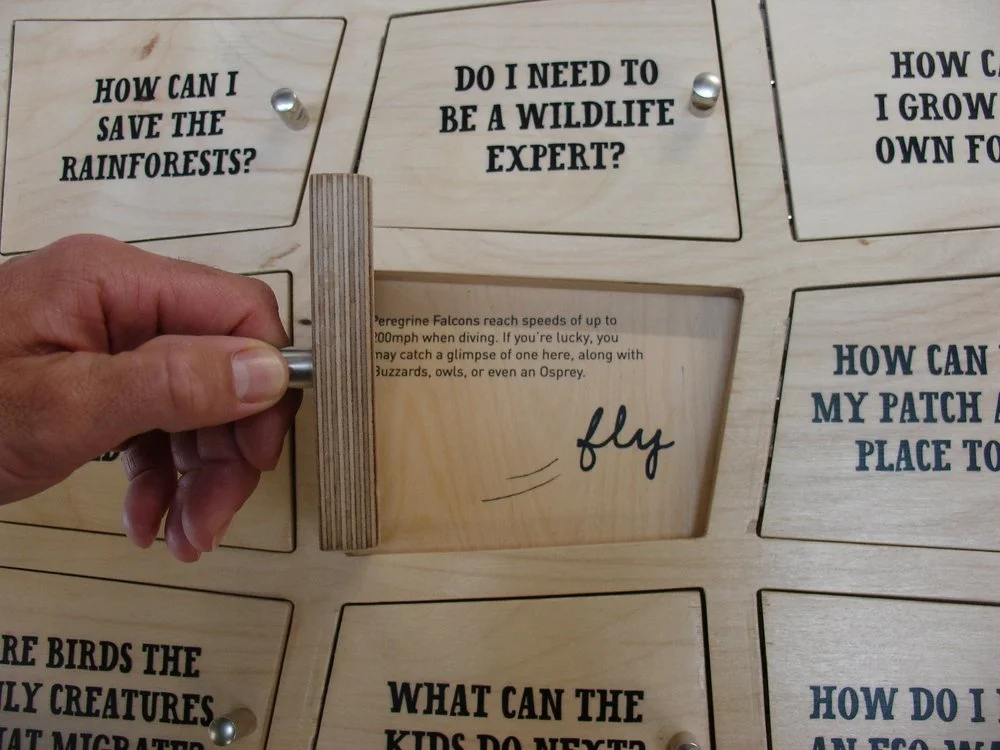
The 'Obstructed' labels feature crossed-out typography to highlight the theme. They will be made of perspex with a 'pull-up' feature encouraging viewers to lift the white label 'obstruction' to view the black label.
Reference image 'Obstructed'(LUCY GALLOWAY DESIGN, n.d.) (Environment에 있는 Jen Liao님의 핀 | 사진 스튜디오 설치, 사업 아이디어, 디스 플레이, n.d.)
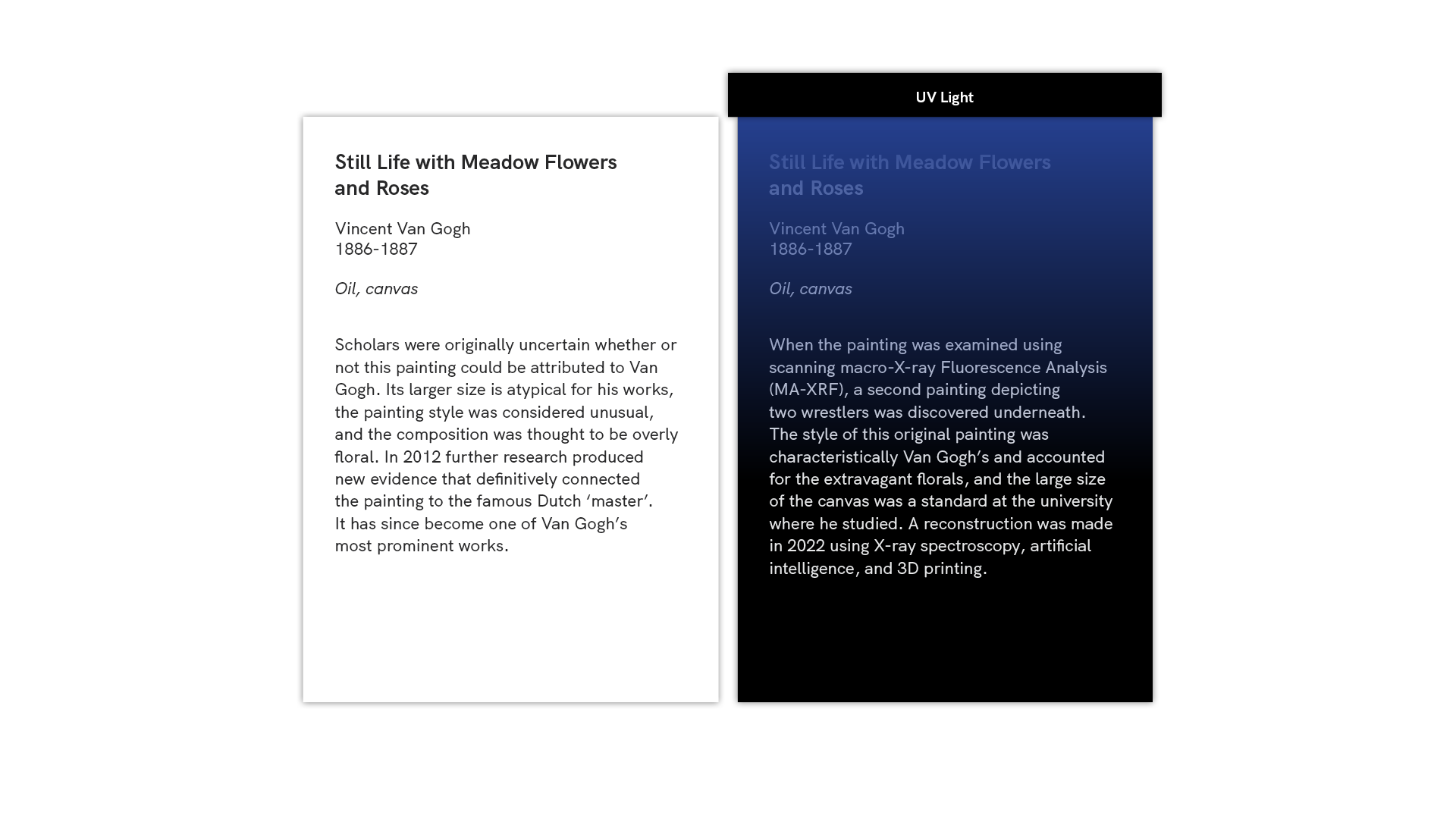
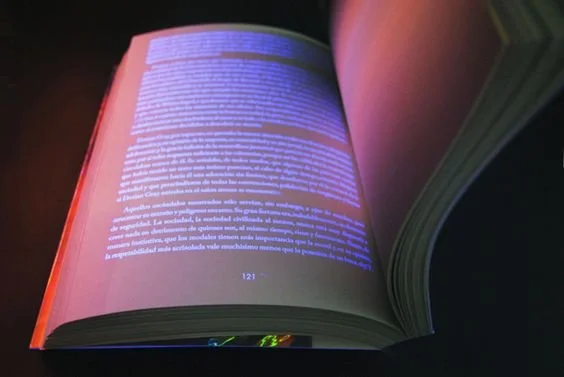
The 'Obscured' labels feature a gradient at the top of the 'hidden' label, partly obscuring the work's title. These labels will be invisible unless viewed under UV light. The exhibit will encourage viewers to press a button to view this label. An automatic time-out feature will turn off the light for the next visitor then discover.
Reference image (Stef Silva, n.d.)